Copper Tube Cutting Machine Selection Guide for Refrigeration, New Energy Thermal Management and Electrical Components Manufacturers
In the refrigeration, new energy thermal management and electrical components industries, copper tube processors almost all face the same problem: pure copper and brass are relatively soft. When tubes of different diameters and wall thicknesses are cut on the same machine, ordinary equipment easily squeezes and deforms the tube, leaves large burrs at the cut, and produces unstable dimensions.
Copper material is also expensive. The long remnant tails left by conventional cutting quietly accumulate into a substantial raw material loss over time. Switching equipment brings its own worries: poor versatility, unable to cut small tubes or not strong enough for large ones, and frequent changeovers and re-setting that delay delivery.
Addressing these common industry pain points, Shuangdeyu Precision Machinery (Suzhou) Co., Ltd. has reviewed a large number of on-site customer cases and put together this copper tube cutting machine selection guide. Two main machine models cover cutting requirements from small-diameter to large-diameter pure copper, brass, copper profiles and aluminum profiles.
1. Four Core Pain Points in Copper Tube Processing — Where Many Plants Get It Wrong
Copper is a highly ductile non-ferrous metal. Pure copper and brass behave noticeably differently during machining, and tube diameters and wall thicknesses come in a wide range of specifications. Many buyers look only at price when selecting equipment and only discover the hidden costs after production starts:
- Thin-wall copper tubes deform easily under clamping: Clamping force is hard to control — clamp too tight and the tube is crushed, clamp too loose and the workpiece slips. In batch production, dimensions fluctuate and the scrap rate rises.
- Heavy burrs at the cut mean more rework: Burrs on the cut end face are severe and require secondary manual grinding, which consumes labor and lengthens the production cycle.
- Long remnant tails waste expensive copper: Conventional equipment leaves a long remnant. With high copper prices and high-volume production, material loss eats directly into processing profit.
- Frequent changeovers between multiple specifications: Plants need to cut small copper tubes and copper bars as well as large-diameter copper tubes and aluminum profiles. A machine that handles only one product type drives up equipment investment.
Industry reality: many processing plants handle pure copper tubes, brass tubes, copper busbars and aluminum profiles at the same time. Cutting multiple materials on mixed orders places higher demands on machine versatility.
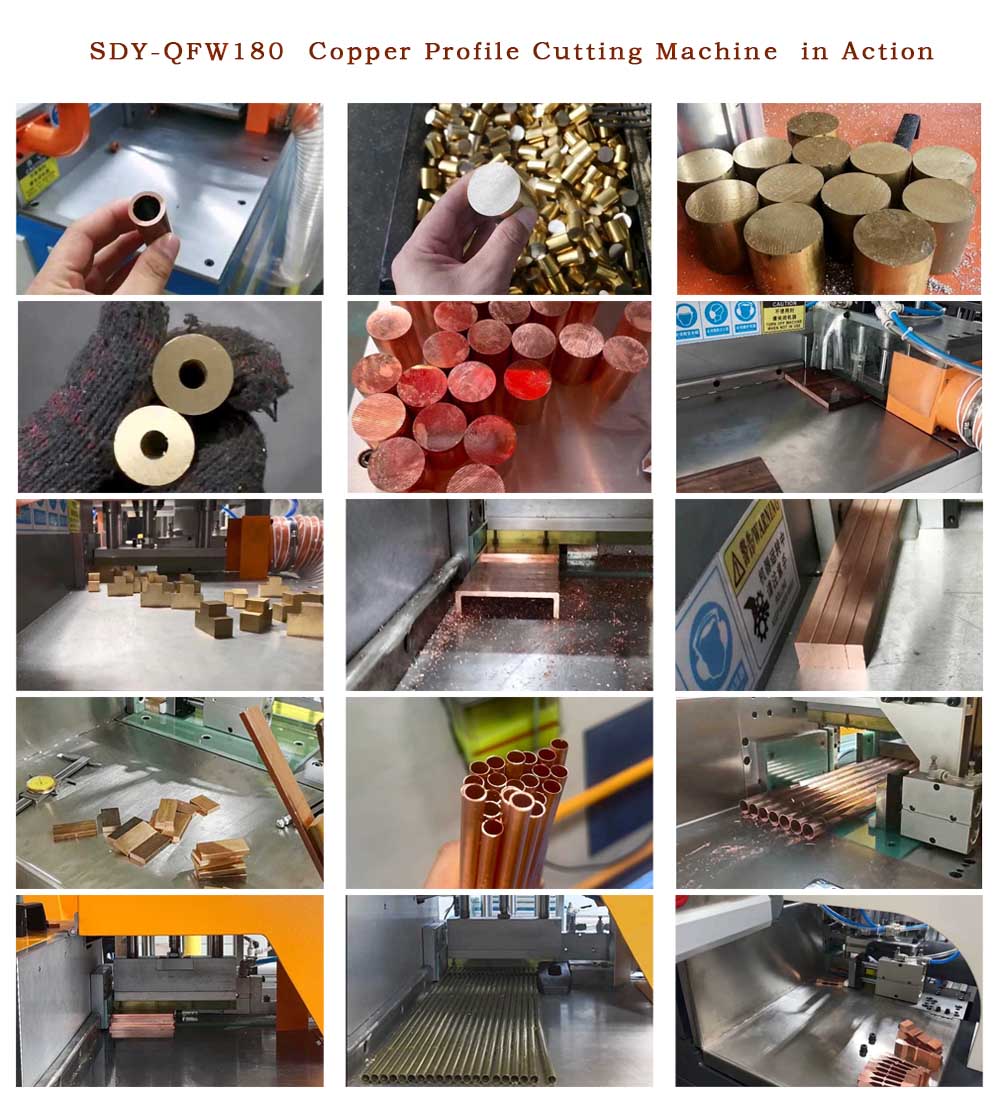
2. Small-Diameter Copper Tube Cutting: SDY-Q180 — a Versatile Machine for Multiple Materials
For small-diameter copper tubes, thin-wall pure copper tubes and small copper bars, the SDY-Q180 is the preferred model proven in production by a large number of customers.
✅ Pain point match: Order specifications are mixed — the plant needs to cut copper tubes as well as small copper pieces and aluminum profiles, and wants one machine to cover multiple materials so as to reduce equipment investment. ✅ Machine advantages: High versatility. It handles small-diameter pure copper and brass tubes, and also cuts small copper bars and aluminum profiles. Simple setup and fast changeover between specifications make it ideal for high-variety, small and medium batch production. ✅ On-site evidence: Already in use at several copper tube processing companies, with plenty of real on-site customer photos. Small-tube cutting is stable and the risk of thin-wall tube deformation is effectively reduced.
Applications: small-diameter copper tubes, small copper bars and small aluminum profiles — processing plants running mixed, multi-category production.
3. Large-Diameter Copper Tube Cutting: SDY-QFW550-B No-Remnant Model — Reducing Precious Metal Loss
For companies cutting larger-diameter copper tubes, remnant waste is the top concern. The SDY-QFW550-B features a no-remnant cutting configuration that directly addresses the loss of high-value copper material.
✅ Pain point match: Copper tube raw material costs are high, and every cut leaves a long remnant tail — over long-term production the material loss becomes huge. Wide tubes also exceed the cutting stroke of ordinary equipment. ✅ Machine advantages: No-remnant structural design reduces copper waste; maximum cutting width up to 400 mm, suitable for batch cutting of large-diameter copper tubes. The machine has been verified in production at multiple customer sites and offers strong stability. ✅ On-site evidence: Numerous real on-site customer cases; projects cutting large-diameter copper tubes and thick-wall brass run stably.
Applications: batch cutting of large-diameter pure copper and brass tubes — plants that care about material utilization and want to reduce remnant loss.
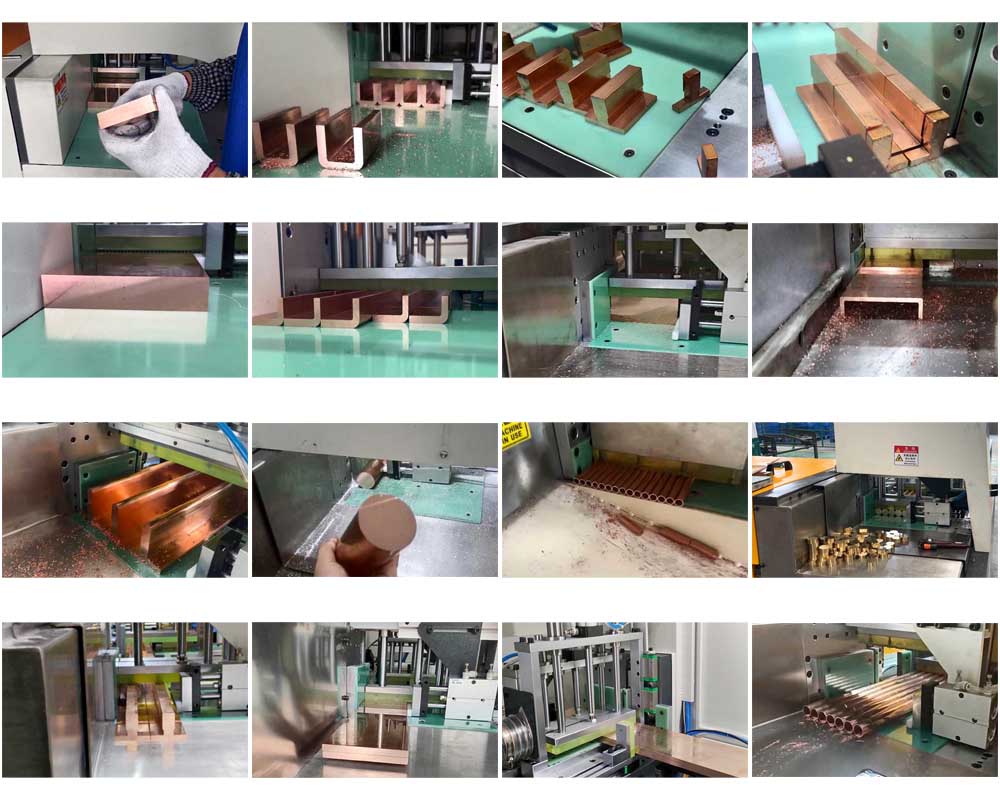
4. Copper Tube Cutting Machine Selection Summary: Match the Model to the Tube Diameter, and Refer to Real Customer Cases
When selecting a copper tube cutting machine, do not chase high-end configurations or the lowest price blindly. Set the model first according to the tube diameter, wall thickness, material (pure copper / brass), and whether multiple materials are cut in mixed production.
- Small diameter, mixed specifications (copper tube + copper bar + aluminum): choose the SDY-Q180 versatile cutting machine first.
- Large-diameter copper tubes, wanting lower remnant loss: choose the SDY-QFW550-B no-remnant cutting machine first.
Shuangdeyu Precision Machinery (Suzhou) Co., Ltd. has long served non-ferrous metal processing customers. In addition to pure copper tubes and brass tubes, we also machine copper profiles, copper plates, copper busbars and aluminum profiles. If you are looking for copper tube cutting equipment, we can provide a large number of real on-site customer cases and help you evaluate the right model based on your product specifications.
Closing (informational ending, soft guidance — compliant, no hard sell)
Cutting processes for non-ferrous metals keep evolving, and reducing cost, improving efficiency and cutting material waste remain long-term concerns for copper tube processors. When selecting a cutting machine, we recommend referring first to cases delivered for companies in the same industry and verifying cutting results on site, so as to lower the risk of putting a machine into production.